Meet Neo, your AI-powered Co-GP.

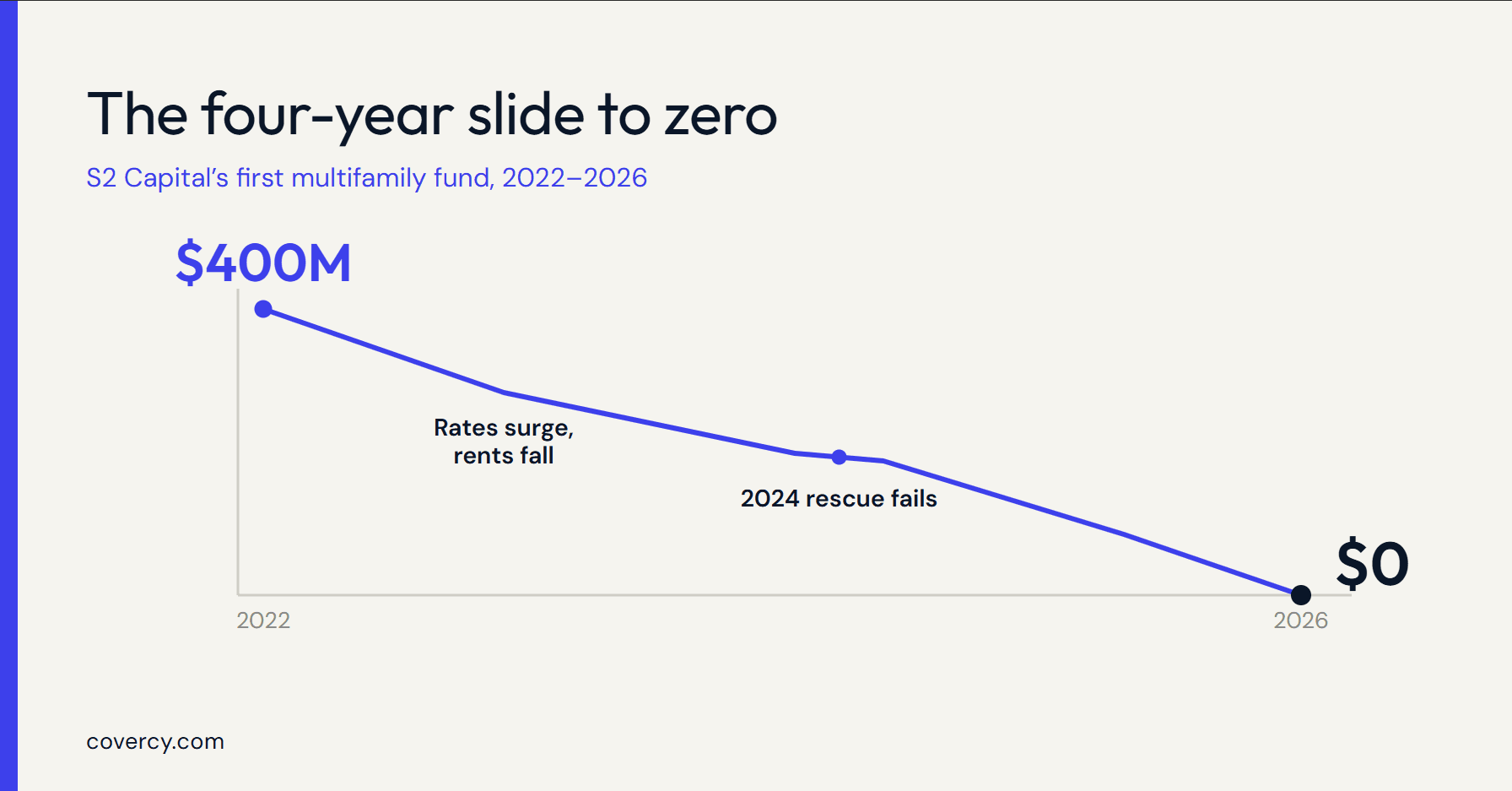
On July 1, Scott Everett, the founder of S2 Capital, sent his limited partners a letter no general partner (GP) wants to write. The firm's first value-add multifamily fund, which raised $400 million and held 20 properties, will return no capital. Limited partners and preferred equity investors get nothing back. For every LP reading that letter, it forces the question they can rarely answer between quarterly reports: what is actually happening to my money?
The fund closed in 2022 at a $400 million hard cap, comfortably past its original $250 million target. The causes of what followed are familiar to anyone operating value-add multifamily across the Sun Belt. Over the life of the fund, operating expenses rose an average of 16% and interest costs climbed roughly 50%, while rents fell 24%, according to reporting from CRE Daily. The fund carried floating-rate debt through the cheap-money years, and when rates jumped the coverage math gave way. Everett now plans to buy the debt on the fund's viable assets, restructure it, and move those properties into a new vehicle to recover what he can, per the July 1 letter reported by The Real Deal.
Leverage broke the fund. Reporting shapes the aftermath.
This is a leverage story first. No investor reporting software refinances a floating-rate loan or grows rents in a soft market. But the same reporting flags a shift on the investor side: LPs are now examining debt structures, rate exposure, and capital reserves far more closely before they commit to a fund. That scrutiny builds over years of quarterly statements. It does not begin the day a distribution stops.
Fund administration is where trust is won or lost
A multifamily fund lives or dies on the quality of its books. Capital accounts have to reconcile. NAV has to be defensible. Distributions and capital calls have to tie back to the exact numbers investors see in their statements. When a fund hits trouble the way S2's did, the firms that hold their investors' confidence are the ones whose fund administration stayed clean and current the whole way through. Books reconstructed in a hurry once the losses land tell investors the operation was never really in control.
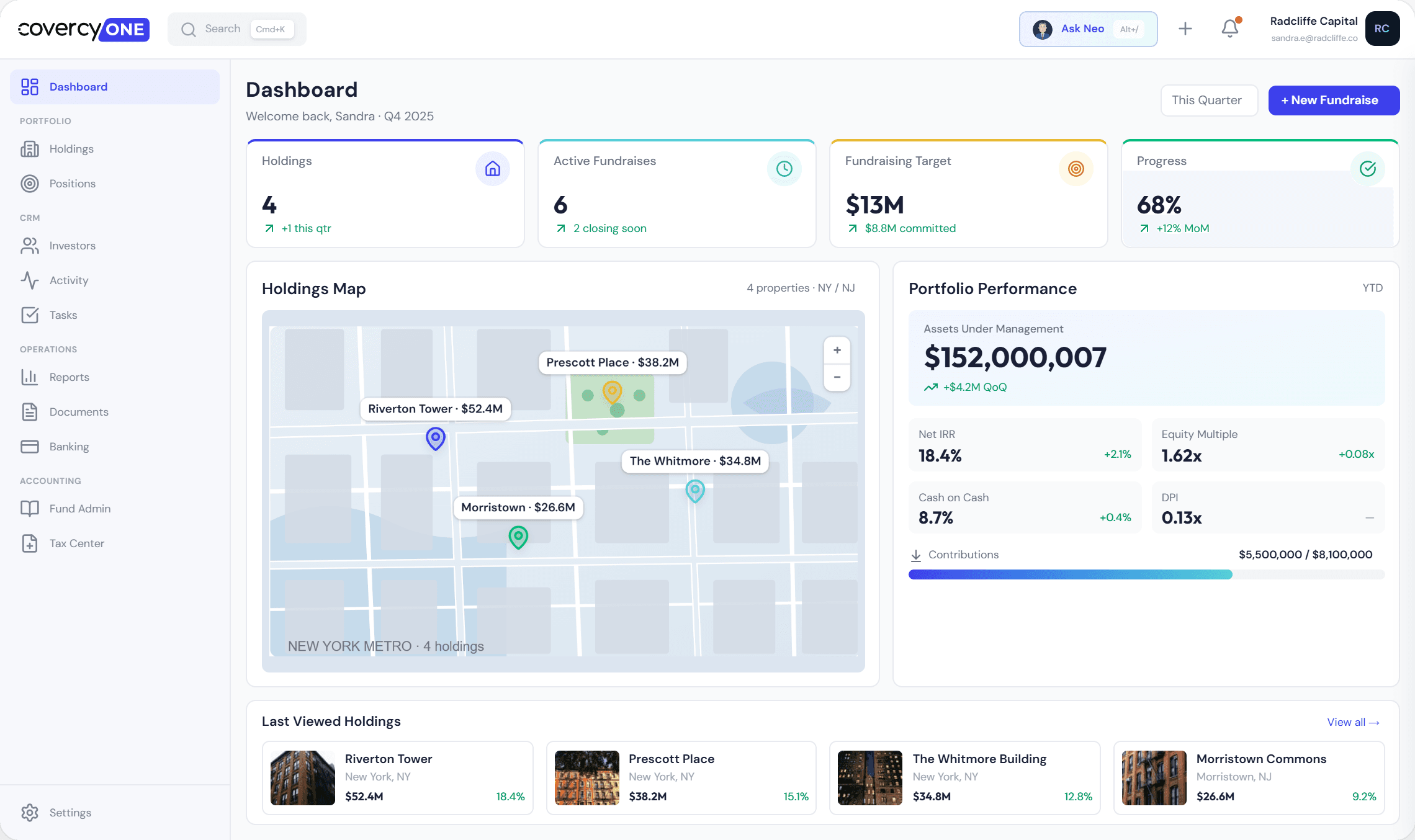
This is why we built fund administration as a service that runs directly on the platform. Covercy One keeps capital accounts, NAV, and transaction history reconciled continuously, and the service is delivered by the Covercy Fund Administration team. Because the data is already organized, investor reporting comes straight out of the books instead of a year-end scramble across spreadsheets and email.
What investor reporting software actually does for a GP
Reporting does not change a fund's IRR. It changes whether these same limited partners (LPs) take the call when the firm raises again. The clarity a GP provides in the good quarters is what earns them the benefit of the doubt in the bad ones.
GPs who survive a bad fund keep their investors ahead of the news
Their LPs are rarely surprised. They watch coverage ratios tighten two quarters before it reaches a headline, because the numbers sit in front of them instead of arriving once a year in a summary. When the bad news comes, it confirms something they were already tracking. That kind of transparency is an operating discipline, and increasingly it is a function of the investor reporting software and fund administration a firm runs on.
What continuous reporting looks like in practice
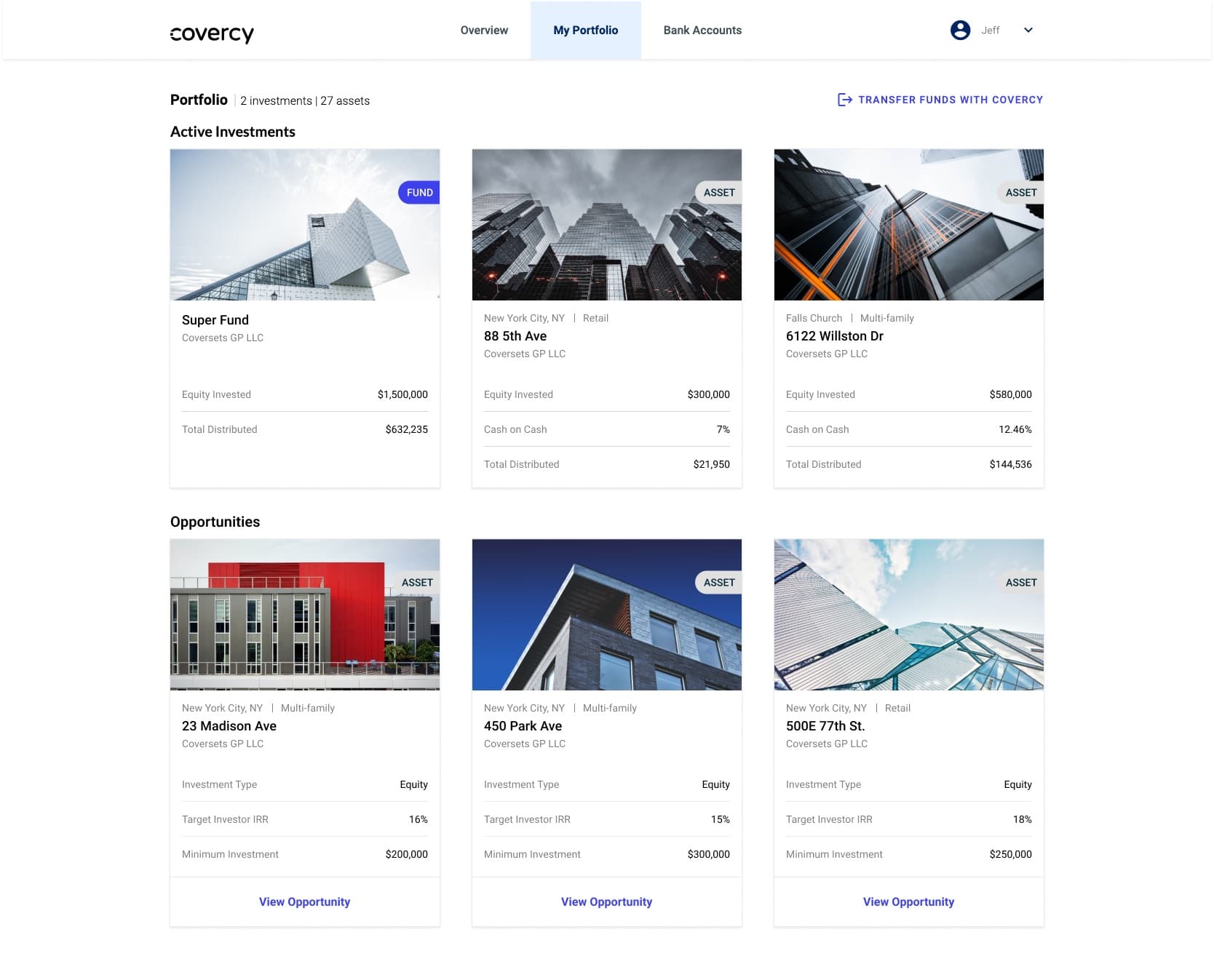
Good reporting lets an investor answer their own questions the moment they have them, without waiting for a quarter to close. Strong real estate investor reporting software gives every LP a live view of their position and the numbers behind it:
- A real-time investor portal showing capital accounts, performance, and full transaction history, available around the clock.
- Capital account statements and NAV that reconcile to the books, so the figure an LP sees is the figure of record.
- Distribution and capital-call workflows that show investors what they received, when, and how it was calculated.
- Document and K-1 delivery in one place, so tax season stops being an email chase.
- Rate, debt, and reserve detail reported alongside returns, so exposure stays visible early.
On Covercy One, that view lives in the investor portal, the numbers come from continuous performance reporting, and the distribution and capital-call detail reconciles automatically. For a broader primer on the category, see our guide to real estate investor reporting software.
Reporting is the asset you borrow against
S2's next raise depends on investors deciding whether to trust the same team a second time, and that decision is being shaped right now by how the firm communicates through the hardest stretch of its history. A GP who reports openly through the ugly quarters is building the one asset that outlasts any single fund: investors who will back the team again.
The takeaway
Software does not save a fund. The investor reporting software and fund administration you run in the good years decide whether your LPs are blindsided in the bad ones, and whether they answer the phone for your next deal. For more on holding investor trust across a full cycle, read our guide to investor relations for GPs and how to get LPs to reinvest in your next deal.
Sources: CRE Daily and The Real Deal reporting on S2 Capital's fund dissolution and investor communications, July 2026.
- What is investor reporting software?
- Investor reporting software is the platform a fund manager uses to share performance, capital account balances, distributions, and documents with limited partners. Strong LP reporting replaces static, once-a-quarter PDFs with a live investor portal LPs can check anytime.
- How does fund administration relate to investor reporting?
- Fund administration produces the reconciled capital accounts, NAV, and transaction records that reporting depends on. When fund admin runs continuously on the same platform, investor reporting comes straight from the books rather than a separate year-end reconciliation, so the numbers investors see always match the numbers of record.
- Does better reporting improve fund returns?
- No. Reporting does not refinance debt or grow rents. What it protects is the GP-LP relationship, meaning whether investors trust the team enough to commit to the next raise, especially after a difficult fund.
Covercy One unifies fundraising, banking, distributions, fund administration, and investor reporting on one platform, so your LPs are never in the dark, in good quarters or bad.
See Covercy One (opens in a new tab)