Meet Neo, your AI-powered Co-GP.

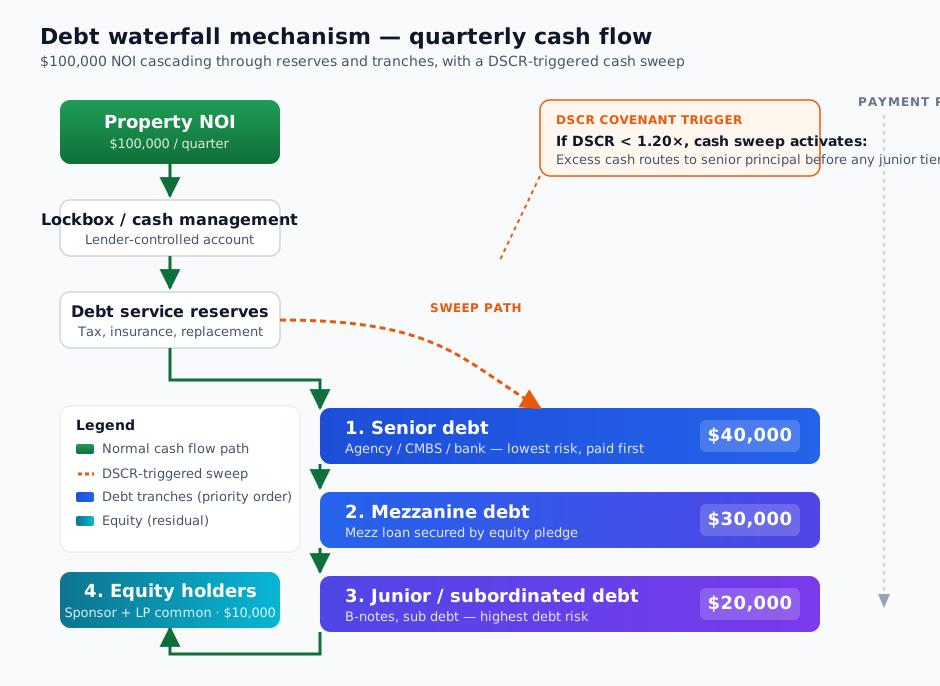
A debt waterfall in commercial real estate routes property cash flow through a fixed payment hierarchy — senior debt first, then mezzanine, then junior or subordinated debt, then equity holders — before any residual cash reaches sponsors or LPs. Lender covenants and reserve accounts can trigger sweeps that reroute cash mid-cascade.
This guide walks through how the cascade works, where it sits in the capital stack, how it differs from equity waterfalls, what happens when coverage falls short, the special case of construction draws, and how GPs automate every tier without spreadsheets.
What is a debt waterfall?
A debt waterfall is the contractual cash-flow priority that governs how a property's net operating income (NOI) is paid out across every tranche of debt — and then equity — each period. Picture a series of stacked buckets: NOI fills the top bucket first, and only once that obligation is satisfied does cash spill into the next.
Most CRE deals carry more than one layer of debt, each with its own coupon, amortization schedule, and covenants. The waterfall encodes the loan agreements and intercreditor terms into a deterministic payment order — part of the broader CRE deal structure sponsors negotiate at closing.
Where the debt waterfall sits in the capital stack
On a capital-stack diagram, senior debt sits at the base and equity sits on top — the senior lender is the most protected because their claim is paid out of asset proceeds first in any sale or workout. The debt waterfall flows in the opposite direction of that risk hierarchy: cash starts at the top of the stack (the property's NOI) and pays the lowest-risk position (senior debt) before flowing up to riskier ones.
Within a single tier, lenders can sit pari passu — Latin for "on equal footing," meaning two or more notes share rights to cash flow pro-rata rather than one being subordinate. Pari passu structures show up in syndicated senior loans and parallel mezz tranches. The waterfall language has to specify both the order between tiers and the split within any tier that has more than one creditor.