تعرّف على Neo، شريكك العام المدعوم بالذكاء الاصطناعي.

قبل ثمانية عشر شهراً، كانت عملية استحواذ نموذجية على عقار سكني متعدد الوحدات تُحتسب عند نسبة قرض إلى قيمة (LTV) تبلغ 65%. أما اليوم، فإن الصفقة نفسها تُحتسب عند 55%، وأحياناً أقل. وهذه الفجوة البالغة 10 نقاط ليست رد فعل مؤقتاً لدورة ائتمانية، ولا حالة شاذة إقليمية؛ بل هي خط الأساس الجديد عبر سندات CMBS، والمُقرِضين المعتمدين على ميزانياتهم العمومية، ومعظم سوق الائتمان الخاص. ويواجه مديرو الصناديق (GPs) الذين نتعامل معهم في Covercy الواقع التشغيلي نفسه: فكل صفقة باتت الآن تتطلب جمع حقوق ملكية أكبر بكثير، وبسرعة أكبر، من شركاء محدودين (LPs) لديهم خيارات أوفر مما كانت لديهم قبل عامين. لقد تحوّلت برمجيات جمع الأموال للاستثمار العقاري المناسبة من مجرد عامل كفاءة جيّد امتلاكه إلى أكثر قطع البنية التحتية التي يمتلكها الراعي تأثيراً ورافعةً.
تتناول هذه المقالة الشكل الفعلي لهذا التحوّل داخل عمليات مدير الصندوق (GP)، وما ينبغي البحث عنه في منظومة جمع أموال مبنية لبيئة تتطلب حقوق ملكية مرتفعة.
بيئة الإقراض أُعيد ضبطها
الأرقام الرئيسية واضحة بما يكفي. فنسب LTV لسندات CMBS التي كانت تتجاوز بانتظام 70% في عام 2021 باتت الآن تستقر في نطاق 55–60%. وقد شدّد المُقرِضون من البنوك، ولا سيما البنوك الإقليمية التي تتعامل مع انكشاف على العقارات التجارية ضمن ميزانياتها العمومية، معايير الاكتتاب الخاصة بنسب تغطية خدمة الدين، واشترطوا احتياطيات أعلى. وقد تدخّل الائتمان الخاص لسدّ جزء من الفجوة، لكن بأسعار قسائم أعلى وبمتطلبات LTV متحفظة خاصة به. أما ديون شركات التأمين، التي شكّلت تقليدياً الشريحة الأدنى من حيث LTV، فقد بقيت تقريباً حيث كانت، وهو ما يجعلها تبدو الآن سخية بالمقارنة.
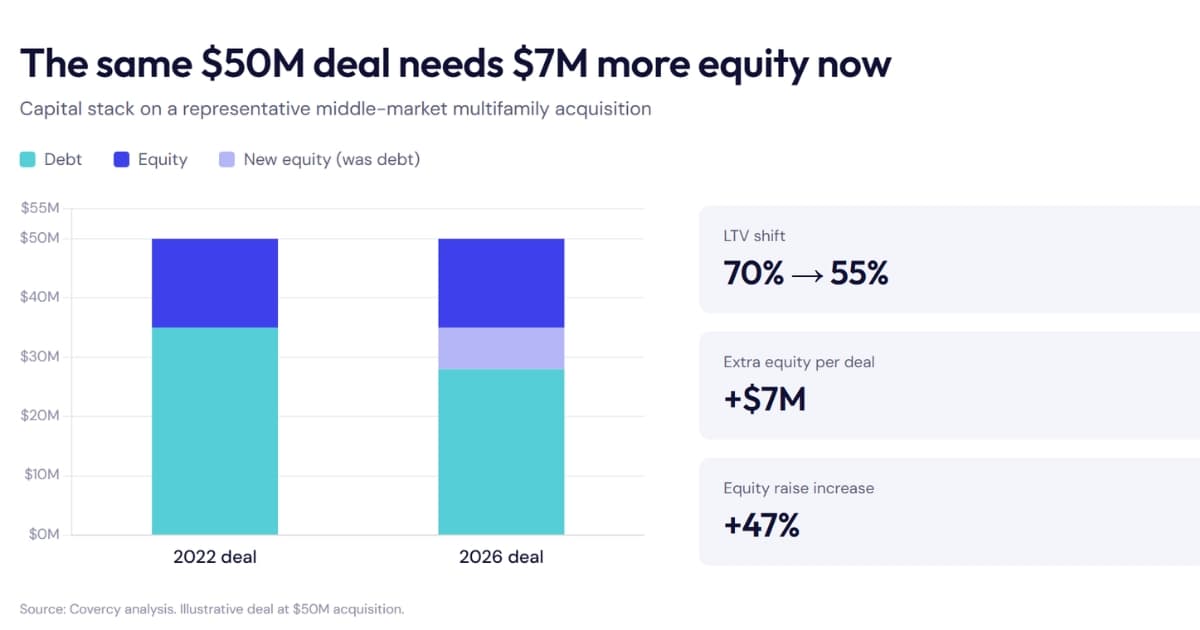
ما يعنيه هذا على مستوى الصفقة هو أن الراعي الذي أبرم عملية استحواذ بقيمة 50 مليون دولار في عام 2022 ربما جمع 15 مليون دولار من حقوق الملكية مقابل 35 مليون دولار من الديون. أما عملية الاستحواذ نفسها في عام 2026 فمن المرجح أن تتطلب 22 مليون دولار من حقوق الملكية مقابل 28 مليون دولار من الديون. وهذه زيادة بنسبة 47% في حقوق الملكية المجموعة لكل صفقة، عند حجم صفقة متماثل تقريباً، وفي فئة الأصول نفسها، مع توقّع الشركاء المحدودين (LPs) لمعدل العائد نفسه.
فجوة الـ15%، محسوبة بدولارات حقوق الملكية
إن الحساب بالدولار هو الجزء الذي يظهر أثره تشغيلياً. فمعظم الرعاة الذين نتحدث إليهم ظلّوا يدقّقون هذه الأرقام على مدى الفصول العديدة الماضية، وتُظهر الأرقام باستمرار النمط نفسه. وتبدو صفقة نموذجية في سوق متوسطة لعقار سكني متعدد الوحدات بقيمة مضافة، باستحواذ قدره 50 مليون دولار ونفقات رأسمالية قدرها 5 ملايين دولار، على النحو التالي:
- هيكل رأس المال في 2022: نحو 38 مليون دولار ديوناً عند نسبة LTV تبلغ 70%، ونحو 17 مليون دولار حقوق ملكية
- هيكل رأس المال في 2026: نحو 30 مليون دولار ديوناً عند نسبة LTV تبلغ 55%، ونحو 25 مليون دولار حقوق ملكية
أي ما يقارب 8 ملايين دولار إضافية من حقوق الملكية لكل صفقة. وبالنسبة إلى راعٍ ينفّذ أربع صفقات سنوياً، فهذا يعني 32 مليون دولار من رأس المال الإضافي يجب الحصول عليه، والحصول على تعهّدات مبدئية به، ثم تعهّدات نهائية، وإجراء فحص اعرف عميلك (KYC) عليه، وإعداد مستندات الاكتتاب الخاصة به، وتحويله مصرفياً، عبر قاعدة الشركاء المحدودين (LPs) نفسها وضمن النافذة الزمنية نفسها كما في السابق. لا تزال اقتصاديات الصفقة قابلة للنجاح؛ لكن الحساب التشغيلي هو ما ينهار.
لماذا لا يُعدّ "اجمع المزيد فحسب" استراتيجية
يصطدم معظم الرعاة بأربع نقاط اختناق محددة عندما يتضخّم متطلب حقوق الملكية بشكل جوهري:
أولاها طول دورة جمع الأموال. فالراعي الذي اعتاد إغلاق عملية جمع حقوق ملكية بقيمة 15 مليون دولار خلال 30 يوماً بات الآن بحاجة إلى إغلاق 25 مليون دولار ضمن النافذة الزمنية نفسها، أو يخاطر بخسارة الصفقة لصالح مزايد أسرع. وزيادة القدرة تعني إما إضافة شركاء محدودين (LPs) جدد (وهو ما يتطلب مزيداً من التواصل، ومزيداً من اللقاءات الأولى، ومزيداً من فحوص KYC) أو العودة إلى الشركاء المحدودين الحاليين بشيكات أكبر (وهو ما يتطلب مزيداً من نقاط التواصل لطمأنتهم بشأن مخاطر التركّز وشروط الصفقة). وكلا المسارين يضيف احتكاكاً.
وثانيتها معدّل إنتاجية المستندات. فالمزيد من الدولارات لكل صفقة يعني عادةً مزيداً من الشركاء المحدودين (LPs) لكل صفقة، وهو ما يعني مزيداً من مستندات الاكتتاب، ومزيداً من عمليات التحقق من أهلية الاعتماد، ومزيداً من التبادلات حول صفحات التوقيع. والرعاة الذين يديرون هذا عبر البريد الإلكتروني وDocuSign بالتوازي مع جداول بيانات تتبّع يدوية يكتشفون أن العبء التشغيلي يتنامى بشكل خطّي مع عدد الشركاء المحدودين.
وثالثتها تعقيد طلبات استدعاء رأس المال (capital calls). فعندما تنمو حقوق الملكية لكل صفقة، يلجأ الرعاة بشكل متزايد إلى هيكلة عمليات الجمع باستدعاءات مرحلية أو على شرائح بدلاً من التمويل الكامل المسبق. ويتطلب ذلك تتبّع التعهّد مقابل المُستدعى مقابل المُموَّل عبر كل شريك محدود (LP)، وغالباً وفق جداول زمنية ومتطلبات إشعار مختلفة. والنسخة اليدوية من هذا هي حيث تتراكم أخطاء التسوية.
ورابعتها التسوية المصرفية والتسوية المتعلقة بالتحويلات. فكل تحويل وارد من شريك محدود (LP) يُعدّ حدثاً يستوجب حفظ السجلات. وعندما يموّل 60 شريكاً محدوداً عملية جمع بقيمة 25 مليون دولار بدلاً من 30 شريكاً محدوداً يموّلون 15 مليون دولار، يتضاعف عبء عمل التسوية قبل أن نحسب الوقت المُستغرَق في ملاحقة التحويلات المفقودة أو تصحيح التحويلات الخاطئة المبالغ. وهذا هو الجزء من سير العمل الذي يستهين به معظم الرعاة إلى أن يجدوا أنفسهم ينجزونه على نطاق واسع.
ما الذي يفعله مديرو الصناديق (GPs) الذين نتعامل معهم في Covercy بشكل مختلف
Covercy هي الشركة التي تقف وراء Covercy One، وهي منصة لإدارة الاستثمار مبنية خصيصاً لمديري الصناديق (GPs) ورعاة الصفقات في قطاع العقارات التجارية. تجمع المنصة بين جمع الأموال، وبوابة المستثمرين، وطلبات استدعاء رأس المال، والتوزيعات، والخدمات المصرفية المتكاملة في نظام واحد مترابط. وقد أجرى مديرو الصناديق الذين يعملون على Covercy One تحوّلات تشغيلية محددة لضغط دورة جمع الأموال الأكثر اعتماداً على حقوق الملكية.
والنمط الذي نراه بشكل أكثر اتساقاً هو نقل تدفّق جمع الأموال الموجّه إلى الشركاء المحدودين (LPs) إلى برمجيات جمع الأموال للاستثمار العقاري التي تتولى كلاً من عملية التعهّد في الواجهة الأمامية والخدمات المصرفية في الواجهة الخلفية ضمن سير عمل واحد. والسبب في أن هذا أكثر أهمية في بيئة ذات LTV متشدّدة هو أن الوقت بين قول الشريك المحدود "أنا مشارك" ووصول الأموال فعلياً إلى حساب الصفقة هو فراغ تشغيلي ميت، وهذا الفراغ الميت يكلّف الرعاة صفقات عندما تكون الجداول الزمنية مضغوطة. وقد أفاد الرعاة الذين قلّصوا تلك النافذة من أسابيع إلى أيام بأنهم باتوا قادرين على الالتزام بجداول إغلاق كانوا سينسحبون منها قبل عام.
والتحوّل الآخر هو تواصل أكثر إحكاماً وأكثر تكراراً مع الشركاء المحدودين (LPs) أثناء عملية الجمع نفسها. فالرعاة الذين اعتادوا إرسال تحديث أو تحديثين عن الجمع باتوا الآن يجرون نقاط تواصل أسبوعية منظمة، بعلامتهم التجارية، مع إظهار تقدّم التعهّدات بشكل مضمّن للشركاء المحدودين. والهدف هو تقليل عدد رسائل البريد الإلكتروني المتفرقة من نوع "كيف تسير عملية الجمع"، وهو ما يتيح لفريق مدير الصندوق (GP) قضاء وقته مع الشركاء المحدودين الذين ما زالوا بالفعل في طور اتخاذ القرار.
سرعة الإغلاق هي الرافعة التنافسية
إن النتيجة على مستوى الصفقة لكل ذلك هي أن سرعة الإغلاق أصبحت عامل تمايز رئيسياً. فعندما يتنافس راعيان على الأصل نفسه ويستطيع أحدهما تقديم دفعة جدية (hard money) خلال 25 يوماً بينما يحتاج الآخر إلى 45 يوماً، يختار البائع الراعي الأول في معظم الأحيان، حتى عند سعر أقل قليلاً. ويدرك الوسطاء ذلك ويوجّهون البائعين نحو الإغلاق الأكثر تأكيداً. وفي سوق يملك فيه البائعون عدداً من المزايدين أقل مما كان لديهم في 2021، يكون اليقين هو العلاوة الوحيدة التي تهم.
وتزيد نسب LTV الأكثر تشدّداً من سوء هذا الوضع، لأن عملية جمع حقوق الملكية الأكبر تُطيل الجدول الزمني لكل راعٍ بشكل افتراضي. فالراعي الذي ضغط عملياته في جمع الأموال بات الآن يُغلق ضمن الجدول الزمني الذي اعتاد الراعي ذو العمليات الأقل إحكاماً تحقيقه حين كان يجمع حقوق ملكية أقل بنسبة 30%. الفجوة التشغيلية حقيقية، وتظهر في سجل الصفقات.
ما ينبغي البحث عنه في منظومة جمع الأموال لديك الآن
إذا كنت تقيّم برمجيات جمع الأموال للاستثمار العقاري مع وضع بيئة الإقراض الجديدة في الحسبان، فإن المعايير التي يستحق منحها الوزن الأكبر هي:
- بوابة شركاء محدودين (LP) بعلامتك التجارية مع تدفّق تعهّد خالٍ من الاحتكاك. يتخذ الشركاء المحدودون قراراتهم بسرعة عندما تبدو الواجهة وكأنها تخص شركة مدير الصندوق (GP) ويكون المسار من المراجعة إلى التعهّد بنقرتين أو ثلاث. وهم يتباطؤون عندما تبدو وكأنها أداة عامة من طرف ثالث. تجربة الشريك المحدود جزء من العلامة التجارية لمدير الصندوق.
- خدمات مصرفية متكاملة واستلام للتحويلات. البرمجيات التي تنتهي عند "إرسال تعليمات التحويل" تترك الجزء الأبطأ من العملية خارج المنصة. ابحث عن أدوات جمع أموال تتضمن الاستلام الفعلي لأموال الشركاء المحدودين (LPs) وتسويتها، لا مجرد أوراق التعهّد.
- أتمتة طلبات استدعاء رأس المال عبر الهياكل المرحلية والمقسّمة على شرائح. ينبغي للنظام المناسب أن يتولى عملية جمع يموّل فيها 60 شريكاً محدوداً (LP) وفق جداول زمنية مختلفة دون تتبّع يدوي. وإذا كانت المنصة تتطلب جدول بيانات لإنجاز ذلك، فهي ليست مبنية للبيئة الحالية.
- رؤية فورية للتعهّدات لفريق مدير الصندوق (GP). إن معرفة المبلغ المُتعهَّد به مبدئياً مقابل المُتعهَّد به نهائياً مقابل المُموَّل، في أي لحظة، تغيّر طريقة إدارة فريق الصفقة لعملية الجمع. والرعاة الذين يعملون بلا رؤية في هذا الجانب ينتهي بهم الأمر إلى الإفراط أو التقصير في الاستقطاب، وكلاهما يكلّف وقتاً.
- التكامل مع مستندات الاكتتاب وفحص KYC. إن سير عمل مستندات أهلية الاعتماد والاكتتاب هو حيث تخسر معظم عمليات الجمع أياماً. ابحث عن برمجيات تدمج تدفّق المستندات مع سجل التعهّدات، بحيث لا يضطر فريق مدير الصندوق (GP) إلى التسوية بين الأنظمة.
- تغطية دورة حياة الصفقة كاملةً بعد عملية الجمع. جمع الأموال هو المرحلة الأولى، لا السباق بأكمله. فطلبات استدعاء رأس المال، والتوزيعات، ونماذج K-1، وإعداد التقارير المستمرة للمستثمرين، كلها تحدث في النظام نفسه إذا كانت المنظومة مصممة بشكل صحيح. وتبديل الأدوات في منتصف دورة حياة الصفقة هو حيث تتراكم أخطاء التسوية.
أين يندرج Covercy One
بُني Covercy One حول فرضية مفادها أن سير العمل اليومي لمدير الصندوق (GP) ينبغي أن يجري على منصة واحدة مترابطة بدلاً من منظومة مكوّنة من أربع إلى ست أدوات غير مترابطة. وهذه الفرضية أكثر أهمية الآن مما كانت عليه حين صُمّمت المنصة لأول مرة، لأن العبء التشغيلي الذي خلقته نسب LTV الأكثر تشدّداً وعمليات جمع حقوق الملكية الأكبر هو بالضبط نوع العبء الذي تتعامل معه الأدوات غير المترابطة بشكل سيئ.
وطبقة الخدمات المصرفية المتكاملة هي العنصر الذي يميّز Covercy One أكثر من غيره عن بوابة المستثمرين النموذجية. فتحويلات الشركاء المحدودين (LPs) تصل إلى حسابات تديرها المنصة، وتجري التسوية مقابل التعهّدات تلقائياً، وتنقل طلبات استدعاء رأس المال الأموال دون أن يضطر مدير الصندوق (GP) إلى مغادرة النظام. وبالنسبة إلى الرعاة الذين يجمعون حقوق ملكية أكبر بنسبة 47% لكل صفقة مما كانوا يجمعونه قبل عامين، فإن هذا التدفّق المتكامل هو الفارق التشغيلي بين بلوغ الجدول الزمني للإغلاق وعدم بلوغه.
يتضمن Covercy One أيضاً Neo، وهو مدير صندوق مساعد يعمل بالذكاء الاصطناعي (AI Co-GP) إلى جانب فريق الصفقة في الجوانب التشغيلية من سير عمل جمع الأموال وما بعد الإغلاق. والمقصود ليس أن يحلّ الذكاء الاصطناعي محل تقدير مدير الصندوق (GP)؛ بل أن العبء التشغيلي الذي تنامى مع نسب LTV الأكثر تشدّداً يمكن استيعابه دون زيادة عدد الموظفين.
الخلاصة
إن بيئة الإقراض لن تعود إلى ما كانت عليه في 2021. والرعاة الذين ما زالوا يعملون وكأن ذلك ممكن يخسرون صفقات لصالح رعاة قاموا بالتكيّف. إن إعادة ضبط سوق الائتمان دائمة لما لا يقل عن السنوات العديدة المقبلة، وهيكل رأس المال المعتمد بكثافة على حقوق الملكية الذي أوجدته بات الآن الفرضية الأساسية التي يتعين على كل مدير صندوق (GP) أن يخطط على أساسها.
غير أن الفجوة التشغيلية التي فتحتها قابلة للإصلاح. فبرمجيات جمع الأموال للاستثمار العقاري المناسبة تضغط الوقت من تعهّد الشريك المحدود (LP) إلى وصول الأموال إلى الحساب، وتتعامل مع تزايد عدد الشركاء المحدودين وحجم المستندات دون إضافة عمل يدوي، وتجعل سرعة الإغلاق ميزة تنافسية بدلاً من قيد متكرر. والرعاة الذين يسدّون تلك الفجوة أولاً هم من سيظلون يفوزون بالمزايدات في عام 2027.
لمعرفة كيف يتعامل Covercy One مع جمع الأموال المعتمد بكثافة على حقوق الملكية من البداية إلى النهاية، بما في ذلك طبقة الخدمات المصرفية المتكاملة التي تسدّ الفجوة بين التعهّد والإيداع، ألقِ نظرة أعمق على منصة جمع الأموال.